
On this page
Which tub fits which condition?
Each row names the moment that usually goes wrong and the setup that usually fixes it. A diagnosis tells you where to start looking; the way the person actually moves tells you where to stop.
| Condition or situation | Hardest moment | Usually fits | Watch for |
|---|---|---|---|
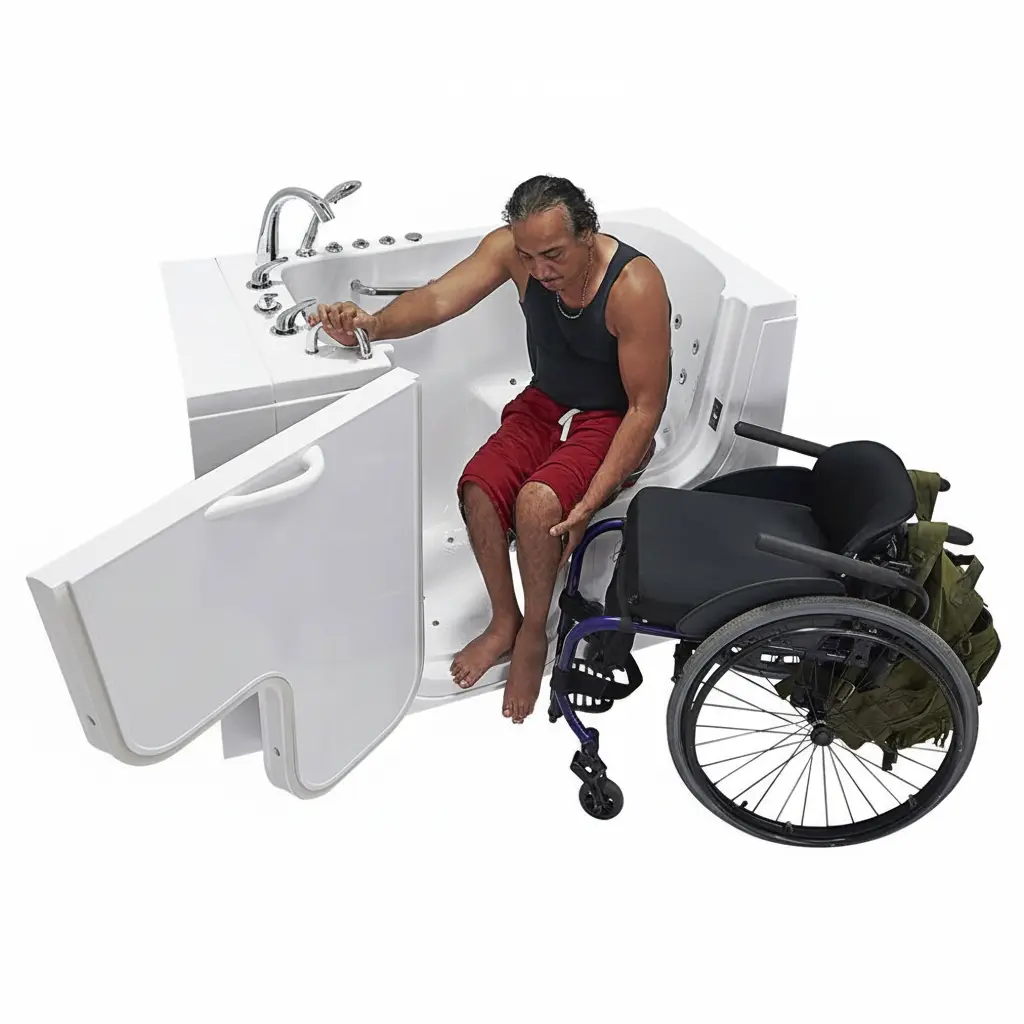
| Wheelchair user who slides across (spinal cord injury, amputation, other paralysis) | Getting from chair to seat without standing | Transfer tub with an outward door at seat height | Seat height against the wheelchair cushion; skin on a hard seat |
| Stroke, one side weaker (hemiplegia) | Balance while turning and stepping | Shower with a seat or bench; walk-in tub only if transfers are practiced and steady | Grab bars and controls on the stronger side; reduced feeling on the weaker side |
| Arthritis in hips, knees or hands | Lowering down and getting back up; gripping | Walk-in tub with a chair-height seat and a warm soak | Door latch and faucet handles sore hands can work |
| Larger body (bariatric) | Fitting through the door and onto the seat | Wide-seat tub, often with an outward door | Seat width against seated hip width; water volume and floor framing |
| MS with heat sensitivity | Getting out of warm water when legs feel heavy | Roll-in shower with a seat, or a short tepid soak | Anti-scald valve; numb skin that cannot judge heat |
| Needs a lift or two helpers | Any transfer at all | Usually a roll-in shower and a shower chair, not a tub | Room for the lift and the helper |
The condition pages on this site go deeper: bathing after a spinal cord injury sorts equipment by hand function, and the MS bathing guide covers heat in detail. This page is the fork in the road before those.
Not sure which row you are in? Call 1-888-779-2284 and describe how the bather got onto a chair this morning. We sell tubs and roll-in showers, so we will tell you honestly when a tub is the wrong answer. Or request a free quote below.
What should a wheelchair user check first?
Seat height. Everything else comes second, because a sideways slide only works when the two seats are close to level. The 2010 ADA Standards put the top of a bathtub seat at 17 to 19 inches above the finished floor (section 610.2), and that range is a sensible target at home too. Measure the top of the wheelchair cushion, not the chair frame, and compare.
Then look at the door. A wheelchair transfer tub has an outward-swinging door that opens the side of the tub down to seat level, so you slide across instead of stepping over anything. An inward door saves floor space but leaves a threshold to get past, which decides it for someone who cannot stand.
Also check that the door opens toward the side you transfer from and that the faucet and hand shower are reachable while seated. Our ADA bathtub requirements page lists every measurement with its section number.
What changes after a stroke or with one weaker side?
This is where a tub seller should be honest. The American Stroke Association's bathing tips start with "take a shower instead of a bath if you can," because showers are safer than tubs and a fall is less likely. Its advice for people who still want a bath is a special seat at the rim of the tub, grab bars, a hand-held shower on a hose, and someone nearby who can help.
So for many stroke survivors the right answer is a shower with a bench and a low or flush entry. A walk-in tub can still work for a survivor who walks, sits steadily and has practiced the transfer with a therapist, as the ASA advises. If you go that way:
- Door and grab bars on the stronger side. Walk-in tubs come in left and right versions, so order the one that suits the transfer.
- Controls on the stronger side too, within reach while seated.
- A thermostatic anti-scald valve. The ASA advises testing water temperature with your wrist before getting in, which matters when one side has reduced feeling.
If the stroke left the person needing a helper for every transfer, read our caregiver-assisted bathing guide before choosing anything. It is written for the person doing the lifting.
Is a walk-in tub a good choice for arthritis?
Often, yes, and it is one of the few conditions where the soak itself is part of the point. The Arthritis Foundation recommends a long warm shower to reduce morning stiffness and increase range of motion, suggests keeping the water between 92 and 100 degrees, and warns against water that is too hot, particularly for people with heart problems. It also notes that the maximum benefit is reached after about 20 minutes in a warm pool or bathtub.
A standard tub fights arthritic joints twice, lowering to the tub floor and pushing back up. A walk-in tub replaces both with sitting on a chair-height seat. Check:
- The door latch and faucet handles. Lever handles beat round knobs for sore hands. Ask to operate the latch yourself.
- Seat height and depth, so knees and hips do not fold deeply to sit.
- A heated seat or backrest, if you sit while the tub fills and drains in a cool bathroom.
Warm water may ease stiffness, but it is not a treatment. With heart or blood pressure problems, ask your doctor what temperature and soak time are safe.
What does a larger bather need?
Room, mostly, and not a weight rating. Ella's Bubbles, one of the brands we sell, says it does not have a set weight limit for its walk-in tubs and that the main question is whether the bather fits comfortably. Its advice is to sit in a sturdy chair, measure across the hips and shoulders and from head to feet while seated, and compare those numbers with the seat width on each spec sheet.
Seat width is where models differ most. Ella's TransferXXL, for example, measures 36 by 55 inches with a 29-inch seat and an outward door, so it fits a standard 5-foot alcove while giving far more hip room than a typical walk-in tub. Bigger tubs hold more water, though: Ella lists its Big4One at 75 to 100 gallons when occupied. Have the installer check your water heater and floor framing before you order, and see our funding guide if a wider model stretches the budget.
What if heat makes symptoms worse?
That is the MS question, and we wrote a full page on it: bathtubs for multiple sclerosis. In short, a deep warm soak holds heat against the body, and a roll-in shower with a seat is easier to keep cool. If you choose a tub, keep soaks short and tepid and add a thermostatic valve. The Consumer Product Safety Commission urges a 120°F water heater setting and notes that even 120°F water can burn after five minutes, which matters for anyone who cannot feel heat well.
Who should help you decide?
An occupational therapist, if you can get one into the bathroom. Ask the doctor for a home safety or bathing evaluation. A therapist watches the real transfer on the real floor and catches what no guide can, like a weak grip on one side or a helper about to hurt their back.
Bring three numbers to that visit and to any quote: seated hip width, the height of the chair or cushion the bather transfers from, and the bathroom door's inside width. The funding guide covers VA, Medicaid waiver and vocational rehab options. Programs may help; none guarantees payment, and we help you check.
Aging Safely Baths has sold and installed Hydro Dimensions, Ella's Bubbles, Meditub and Bestbath tubs and showers since 2011, and the main site compares every handicap bathtub type. Call 1-888-779-2284 or use the form below. No bathing product eliminates the risk of falls; products are designed to reduce risk when installed and used properly.
Questions people ask about choosing a tub for a mobility issue
Is a walk-in tub safe after a stroke?
It can be, for a survivor who walks, sits steadily and has practiced the transfer with a therapist. The American Stroke Association says showers are safer than tubs and recommends a shower when possible. If you choose a tub, put grab bars and controls on the stronger side and add an anti-scald valve.
What seat height should a handicap bathtub have?
The 2010 ADA Standards put the top of a bathtub seat 17 to 19 inches above the floor. ADA rules do not bind a private home, but the range suits most wheelchair transfers. Match it to the top of the wheelchair cushion so the slide stays level.
Is there a weight limit on walk-in tubs?
It depends on the brand. Ella's Bubbles says it has no set weight limit and that fit decides it, so compare seated hip and shoulder width with each model's seat. Check every brand's spec sheet, and have the installer confirm the floor can carry a full tub.
Does a warm bath help arthritis?
Many people find it does. The Arthritis Foundation recommends warm water for morning stiffness, suggests 92 to 100 degrees and warns against water that is too hot, especially with heart problems. A walk-in tub makes the soak easier because you sit on a seat instead of lowering to the tub floor.
What if the condition gets worse over time?
Plan for the bad day and the next five years. Some conditions progress, and a walk-in tub that works today may not suit a future wheelchair user. If decline is likely, a roll-in shower or a transfer tub with an outward door keeps more options open.
Sources
- U.S. Access Board, 2010 ADA Standards for Accessible Design, sections 608 and 610 (checked November 10, 2026).
- American Stroke Association, Bathing Tips for Stroke Survivors (last reviewed March 18, 2024; checked November 10, 2026).
- Arthritis Foundation, Heat Therapy Helps Relax Stiff Joints (checked November 10, 2026).
- Ella's Bubbles, Is There a Weight Limit? Bariatric and Large-Bather Walk-In Tub Options and TransferXXL specifications (checked November 10, 2026).
- U.S. Consumer Product Safety Commission, Avoiding Tap Water Scalds, publication 5098 (PDF, checked November 10, 2026).
