
On this page
Why do hot baths bother people with MS?
Heat sensitivity in MS has a name, Uhthoff's phenomenon, after the German eye specialist who in 1890 noticed that some patients' vision worsened during exercise. The mechanism is now understood as temperature: nerves whose insulating myelin is damaged conduct signals more poorly as they warm up. The VA MS Centers of Excellence puts the share of people with MS who have heat sensitivity at approximately 75%; the MS Trust's figure is around 6 in 10. Either way, it is the rule rather than the exception.
The VA page is specific about how little heat it takes. A rise in core body temperature of as little as 0.25°F can produce symptoms, and even warming the skin without raising core temperature, as in a hot room or direct sun, may be enough. Hot weather, vigorous exercise, fever and a hot bath are its named examples. The MS Trust lists warm baths, showers, saunas and steam rooms among everyday triggers.
A deep bath raises core temperature efficiently, which is why a warm bath was used as a diagnostic test for MS in the 1950s; the MS Trust notes it was being phased out by 1980. What made it a test makes it a daily risk at home.
The symptoms that appear are usually ones you already have, made temporarily worse. Fatigue is the most common; the VA also lists cognitive dulling, increased spasticity, weakness and visual disturbances, and warns that in hot environments people with MS may find it harder to balance when standing, walking or transferring, which raises the risk of a fall. The worsening is a temporary response, not new damage, and the MS Trust says symptoms should improve within a few hours of cooling down.
How warm should bath water be with MS?
No MS organization publishes a single bath temperature, and your own threshold is the one that counts. The VA's closest numbers are for pools: recreational swimming or pool therapy water should be below 85°F, and saunas, hot tubs and hot yoga should be avoided. A hot tub runs at about 102°F to 104°F, and many people fill an ordinary bath hotter than that, so "a nice warm bath" is often well inside the trigger zone.
A practical approach: start tepid, closer to body temperature than to a hot tub, keep the first soaks short, and watch for the earliest warning sign you know in yourself, whether that is blurred vision, heavy legs or foggy thinking. If a symptom appears, drain and cool down rather than waiting it out. Cool showers before and after heat exposure are on the VA's list of cooling strategies, and some people end a bath with a brief cooler rinse from the hand shower.
What if you cannot feel how hot the water is?
Numbness, tingling and altered sensation are common MS symptoms, and the MS Trust lists them among the symptoms heat can worsen. A hand or foot that cannot judge temperature can be scalded by water that feels merely warm. The Consumer Product Safety Commission's tap water scald alert explains why the margin is thin: most adults suffer third-degree burns after two seconds in 150°F water, six seconds at 140°F and thirty seconds at 130°F. Even 120°F water can cause a third-degree burn after about five minutes.
Three controls close the gap between what the skin feels and what the water is:
- Water heater at 120°F. The CPSC urges all users to set residential water heaters to 120°F (49°C). It is the single cheapest change and it protects every tap in the house.
- A thermostatic (anti-scald) valve. A thermostatic mixing valve holds the outlet temperature steady even when someone flushes a toilet or the heater cycles. Most walk-in tubs can be ordered with one, and a plumber can add one to an existing shower. Ask for the valve's maximum setting and have it set on the cool side.
- A thermometer, not a hand. A floating bath thermometer or an inline digital readout tells you the real number. Test with it every time, before the body part that cannot feel heat goes in.
Which bathing setup fits MS?
There is no one answer, because MS varies so much from person to person and from day to day. The table compares the four common setups against the three MS-specific problems: heat, sensation and transfer.
| Setup | Heat control | Transfer demand | Best fit |
|---|---|---|---|
| Standard tub with a transfer bench | Shower only; little heat buildup. Add a thermostatic valve. | Sit, lift legs over the wall, slide along the bench. Hard on a weak or spastic day. | Early MS, good sitting balance, no desire to soak. |
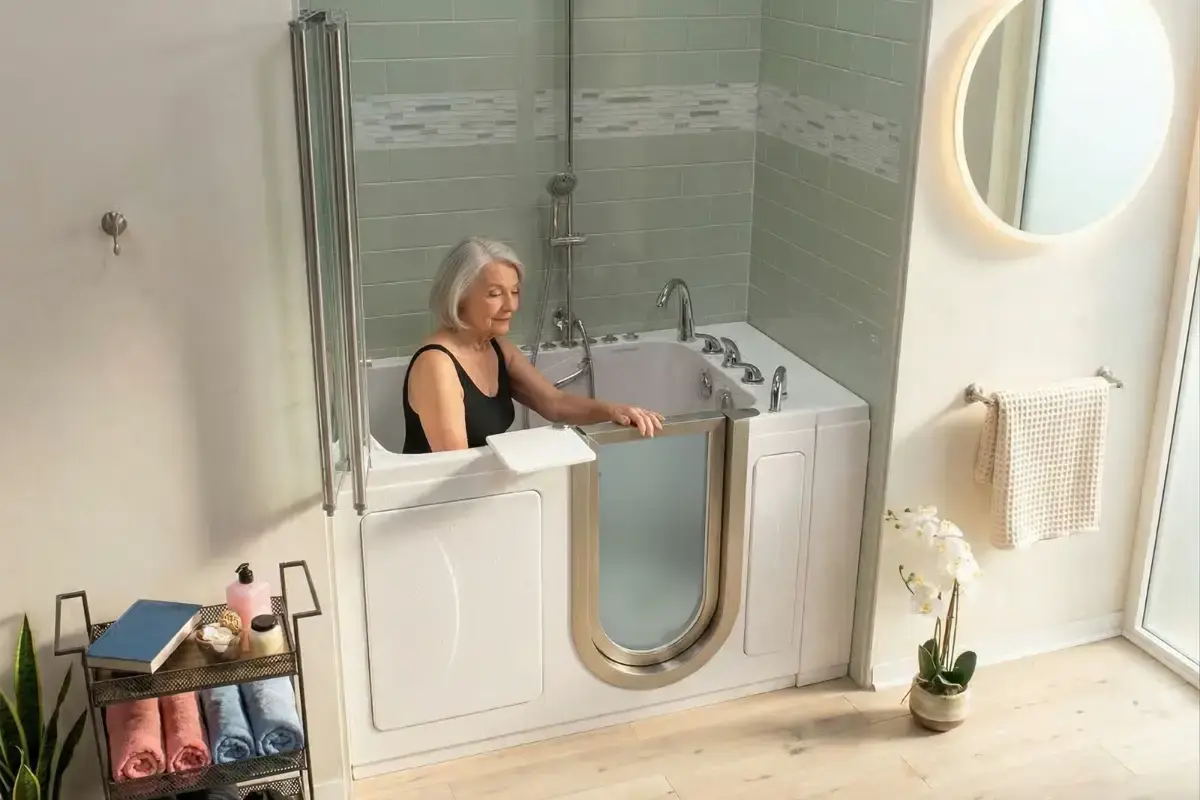
| Walk-in tub (low step-in, inward door) | Deep soak holds heat against the body. Needs tepid water, short soaks and a thermostatic valve. Fast drain matters if symptoms start. | Step over a low threshold and sit. You wait seated while it fills and drains. | People who still walk, want to soak, and have mild or well-managed heat sensitivity. |
| Wheelchair transfer tub (outward door at seat height) | Same as above, with an open side that makes a cool rinse easier. | Sideways slide from the chair to the seat; no standing needed. | Wheelchair users who transfer independently or with one helper and want a soak option. |
| Roll-in shower with a seat | Easiest to keep cool: water runs over you and away. Hand shower lets you rinse cool at the end. | Roll or walk in over a flush threshold; sit on a fold-down seat or rolling shower chair. | Strong heat sensitivity, progressive MS, or anyone who may need a helper or shower chair later. |
Our handicap vs standard tub comparison goes deeper on the first three rows. The roll-in shower option is covered on the main company site's roll-in shower guide.
Transfer tub or roll-in shower?
MS is often progressive, so plan for the body you may have in five years, not only the one you have today. The VA's warning about balance while transferring in the heat is the deciding factor for many families: the moment of greatest risk is standing up from a warm bath, when legs are heaviest and the floor is wet.
A wheelchair transfer tub has an outward-opening door at seat height, so you slide sideways from the chair to the seat and never stand. It suits people who transfer well and want to keep the option of a soak, with the water kept tepid. The seat is inside the tub, so you sit while it fills and drains; ask about fill and drain times and about a padded seat if you sit for long.
A roll-in shower removes the soak and most of the heat problem with it. Water runs over the body and away, a hand shower lets you rinse cool at the end, and a rolling shower chair means a helper can do the whole routine without a lift. If you already need help on bad days, or expect to, this is usually the simpler long-term choice. Our caregiver-assisted bathing guide covers the transfers and the features that protect the helper's back.
Whichever you choose, the fit is in the details: grab bars on your strong side, a seat height that matches your wheelchair cushion, the door hinged on the side you transfer from, and controls reachable while seated. An occupational therapist can settle most of these in one visit.
How do you pace a bath around MS fatigue?
Fatigue is the most common reaction to heat, and a bath can spend energy you needed for the rest of the day. The VA's cooling list translates well to a bathroom routine:
- Bathe when energy is highest, often morning, before the day's heat.
- Cool the room first. The VA notes a hot room alone can trigger symptoms through skin temperature.
- Pre-cool if you run hot. The VA suggests a cooling vest 30 to 60 minutes before activity; a cool drink and a cool cloth on the neck do a lighter version.
- Set everything out so there is no standing around wet.
- Keep it short and tepid, finish with a cooler rinse, and dry while seated.
- Rest afterward. Build the recovery into the plan.
If you notice symptoms starting, drain or turn off the water, stay seated, and cool down. The MS Trust advises checking with your MS team if symptoms are new, last longer than usual or do not improve after cooling.
Who helps pay for an accessible bathroom with MS?
A veteran may qualify for the VA HISA benefit (up to $6,800 lifetime for a service-connected condition, or $2,000 otherwise), and a veteran whose service-connected MS causes loss of use of the legs may qualify for the larger SAH grant. Medicaid home and community-based waivers in many states list bathroom modifications, and vocational rehabilitation agencies sometimes fund changes that keep a working-age person employed. Our funding guide lists each program and the SAH and SHA guide covers the VA bathroom rules. Programs may help; none guarantees payment, and we help you check.
Aging Safely Baths sells and installs Hydro Dimensions, Ella's Bubbles, Meditub and Bestbath tubs and showers, including thermostatic valves and fast-drain options, and writes the itemized quote these programs ask for. Call 1-888-779-2284 or use the form below, and tell us how you transfer on a tired day. No bathing product eliminates the risk of falls; products are designed to reduce risk when installed and used properly. The main site compares every handicap bathtub type if you want to see the models.
Questions people ask about bathing with MS
Can a hot bath make MS symptoms worse?
It may. The VA MS Centers of Excellence lists a hot bath among the situations where heat can worsen MS symptoms, and says a core temperature rise of as little as 0.25°F can produce symptoms. The MS Trust lists warm baths and showers among common triggers. The worsening is usually temporary and eases within a few hours of cooling down, but it can affect balance during the bath and the transfer out.
What water temperature is best for a bath with MS?
There is no single published number for bathing, so start cooler than you think and talk with your neurologist or MS nurse. The VA advises keeping pool or therapy water below 85°F and avoiding hot tubs and saunas. Many people with heat sensitivity settle on tepid water, well below the 102°F to 104°F that hot tubs run at, and limit the time they soak.
Is a walk-in tub a good idea for someone with MS?
It can be, if the person can transfer safely and controls the water temperature. A walk-in tub lets you bathe seated with the door closed, which removes the step over a tub wall. The trade-offs are that you sit while it fills and drains, and a deep soak holds heat against the body. People with strong heat sensitivity often prefer a cool, short soak or a roll-in shower with a seat.
Should someone with MS choose a transfer tub or a roll-in shower?
It depends on how they move on a bad day, not a good one. If they can still stand and pivot, or slide sideways from a wheelchair, a transfer tub works and allows a cool soak. If fatigue or weakness means they may need a helper or a rolling shower chair, a roll-in shower is simpler to use and easier to keep cool. Ask an occupational therapist to watch a transfer before you decide.
Why do anti-scald controls matter more with MS?
Numbness and altered sensation are common MS symptoms, so hot water may not feel hot. The CPSC says most adults get third-degree burns from two seconds in 150°F water, and urges setting water heaters to 120°F. A thermostatic (anti-scald) valve on the tub or shower holds the mix temperature steady, and a bath thermometer tells you the real number instead of relying on feel.
How do you save energy for a bath when MS fatigue is severe?
Treat the bath as one of the day's main tasks and schedule it when energy is highest, often morning. Set out towels, clothes and the shower chair first. Use a hand-held shower and long-handled sponge so you move less. Keep the room cool, keep the water tepid, and plan a rest afterward. Many MS nurses suggest cooling down before and after bathing rather than pushing through fatigue.
Sources
- U.S. Department of Veterans Affairs, Multiple Sclerosis Centers of Excellence, Lynda Hillman, DNP, ARNP, How to Beat the Heat (page last updated February 13, 2024; the live va.gov address returned a 404 on November 8, 2026, so the link is to the Internet Archive copy).
- MS Trust, Heat sensitivity (Uhthoff's phenomenon).
- U.S. Consumer Product Safety Commission, Tap Water Scalds, publication 5098 (PDF).
- U.S. Department of Veterans Affairs, Home Improvements and Structural Alterations (HISA).
